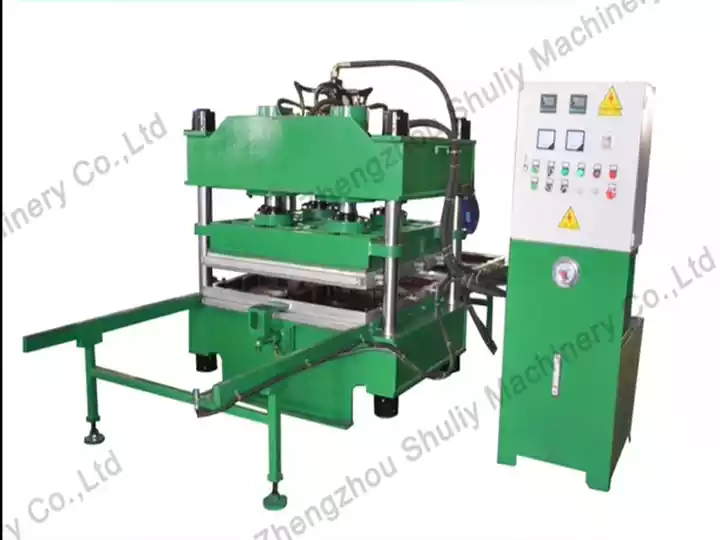
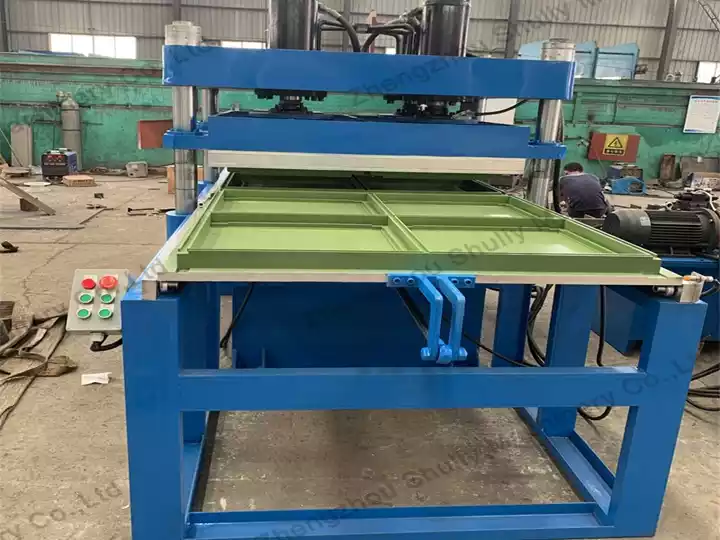
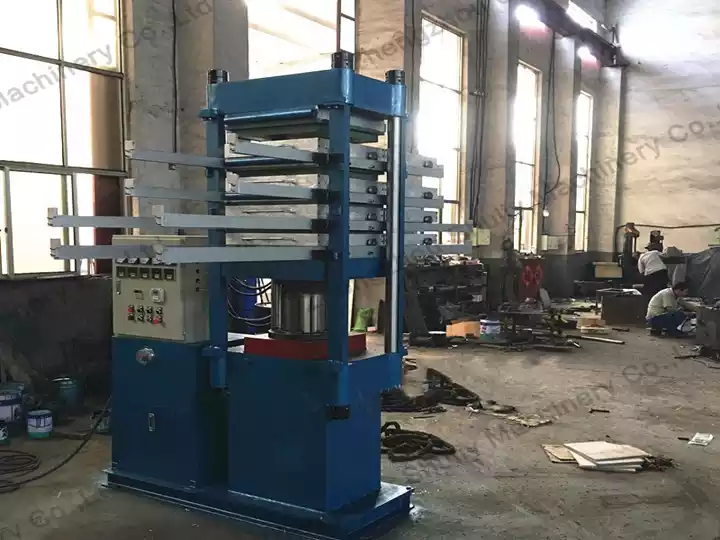
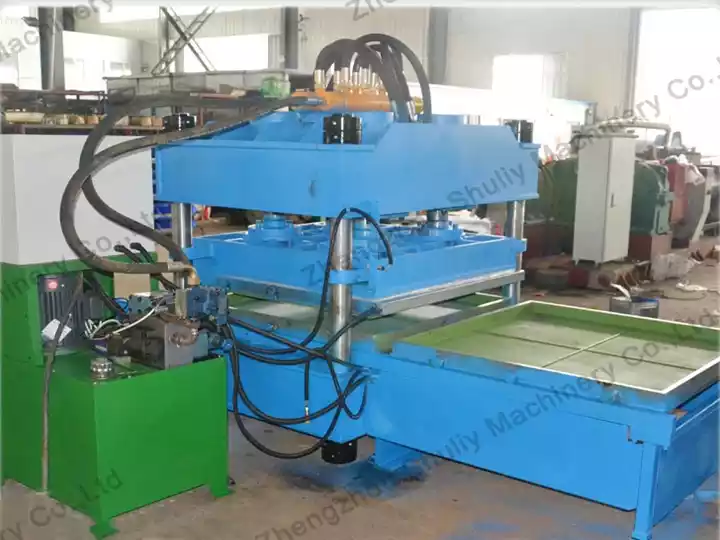
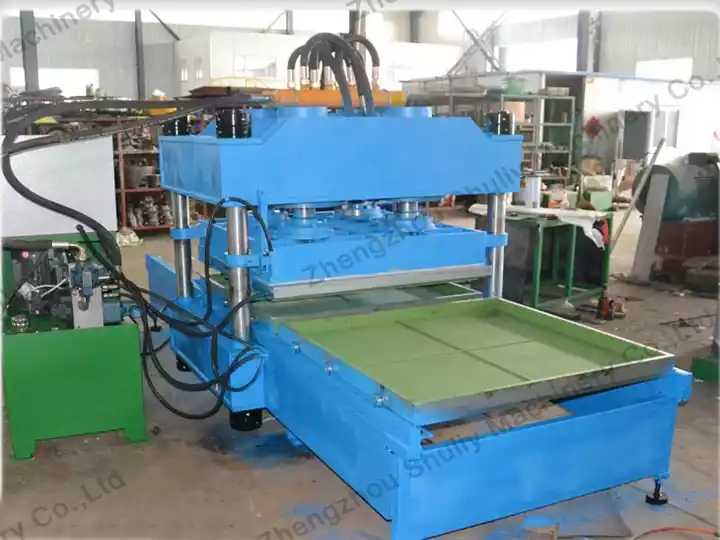
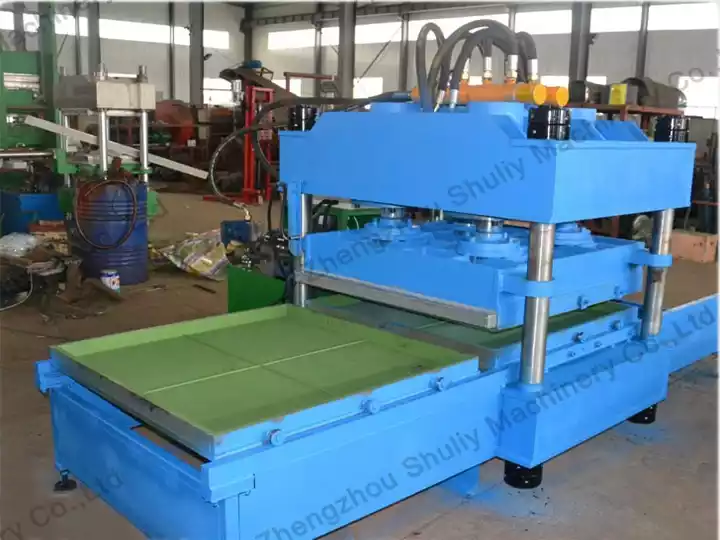
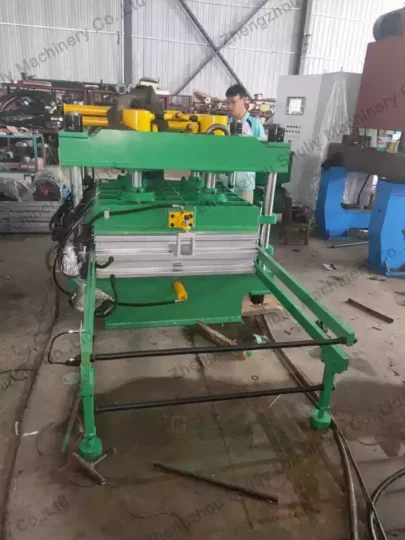
The Rubber Tiles Making Machine is a hydraulic vulcanizing press specially designed for producing colored rubber tiles, rubber bricks, rubber pavers, and other molded rubber products. The machine integrates heating, pressing, molding, and curing into one process, providing a relatively simple production solution for rubber tile manufacturers.
The standard large model SL-D1100×1100 has a 120-ton total pressure, a 1100 × 1100 × 50 mm heating plate, 4 kW motor power, and supports 1-layer molding. A smaller SL-D550×550 model provides 50-ton pressure, a 550 × 550 × 45 mm heating plate, and 3 kW motor power.
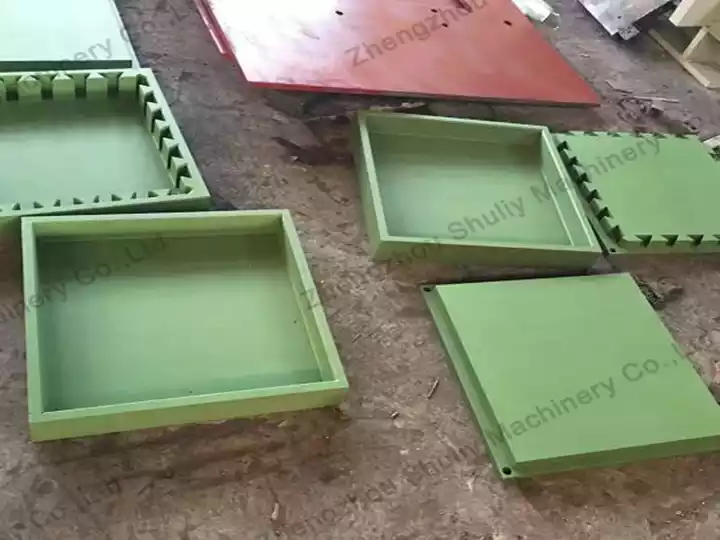
One of the key advantages is the adjustable rubber tile mold. The mold is equipped with adjustable tooling and can produce four product thicknesses: 15, 20, 25, and 30 mm. Its surface uses a Teflon coating process, which provides non-stick properties and makes demolding easier without spraying a release agent before every feeding.
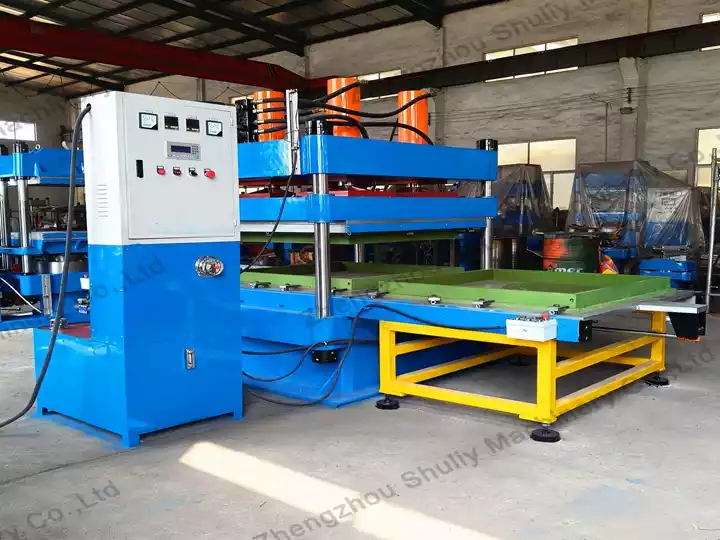
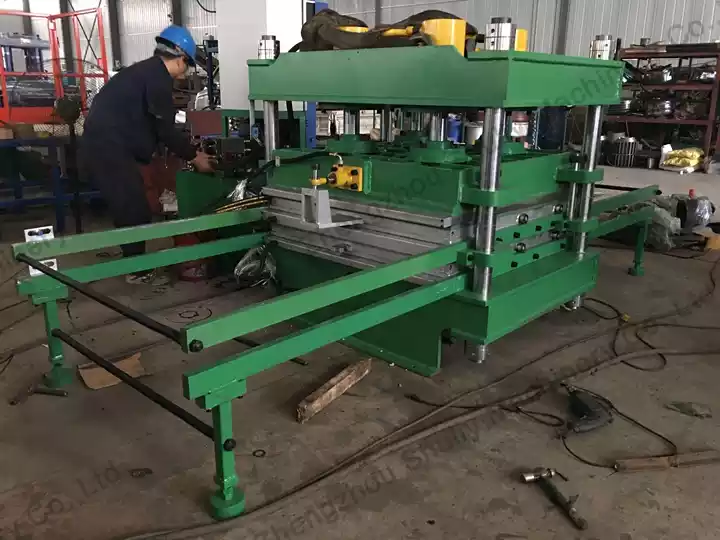
Key Specifications at a Glance
- Machine Type: Rubber Tile Vulcanizing Press
- Main Model: SL-D1100 × 1100
- Total Pressure: 120 tons
- Heating Plate Size: 1100 × 1100 × 50 mm
- Motor Power: 4 kW
- Molding Layers: 1 layer
- Mold Thickness Options: 15 / 20 / 25 / 30 mm
- Mold Surface: Teflon-coated
- Molding Method: Heating + Pressing + Curing
- Applications: Rubber Tiles, Rubber Bricks, Rubber Pavers
The equipment is designed with an integrated main machine, electrical control system, and hydraulic system, making installation and operation relatively straightforward.
Rubber Tile Molding Machine Applications
The Rubber Tiles Making Machine can produce various molded rubber products, including:
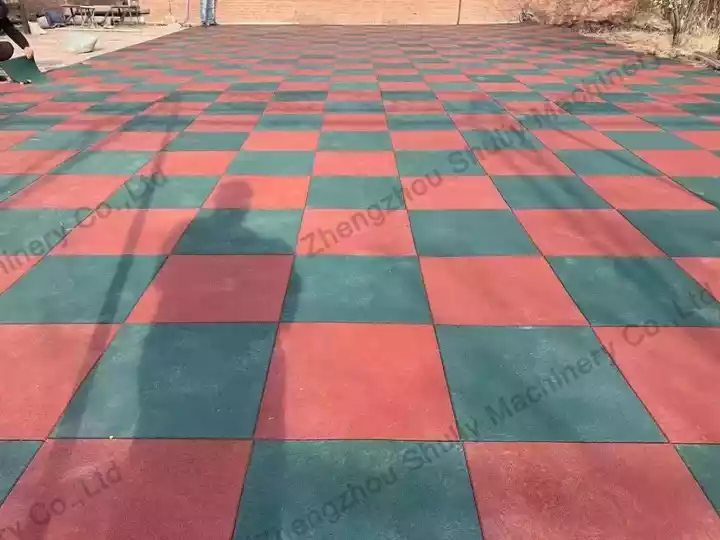
- Rubber floor tiles
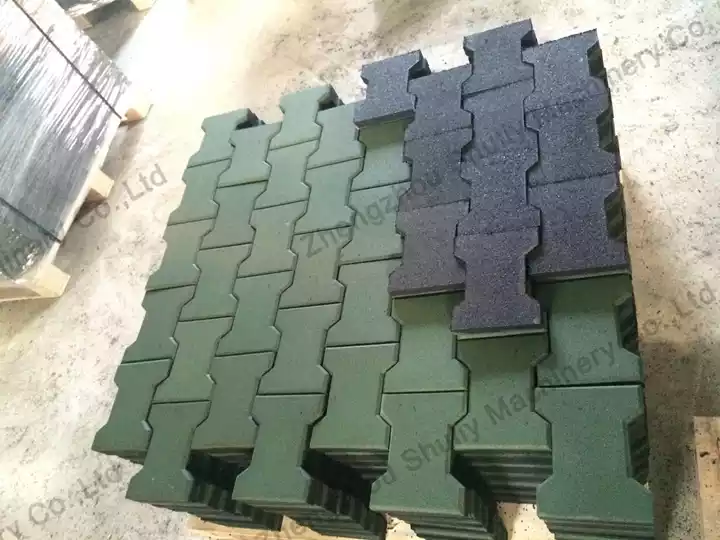
- Rubber bricks
- Rubber pavers
- Colored rubber tiles
- Rubber mats
- Customized rubber products
They can be used for applications such as:
- Sports flooring
- Playground flooring
- Gym flooring
- Walkways
- Outdoor flooring
- Commercial and industrial flooring
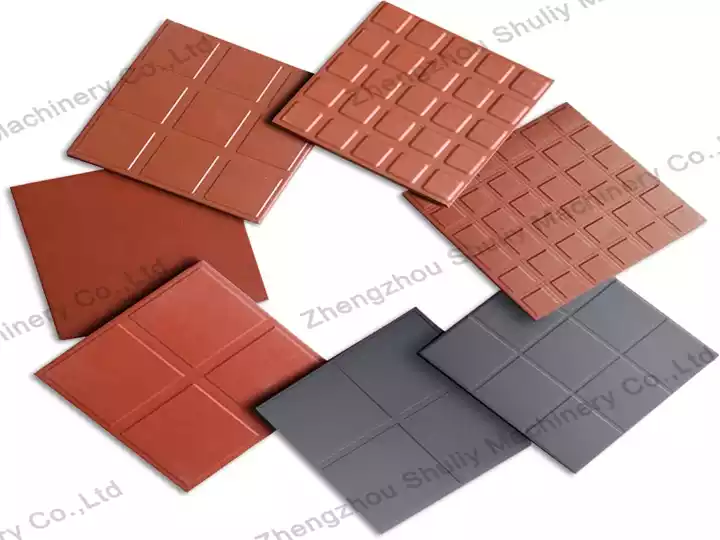
Rubber tiles can be manufactured in different sizes, thicknesses, colors, densities, shapes, and patterns according to the mold design.
How Does the Rubber Tiles Making Machine Work?
The rubber tiles making machine uses heat and hydraulic pressure to form and cure prepared rubber granules.
The basic process is:
Rubber Granules + Binder + Pigment → Mixing → Weighing → Mold Filling → Hydraulic Pressing & Vulcanizing → Demolding → Cooling → Inspection
Step 1: Mixing
Rubber granules, adhesive, and color pigment are added to the mixer according to the required ratio.
The source document indicates that mixing generally takes about 4–6 minutes. Because the adhesive can solidify easily, mix it when it is ready to use.
Step 2: Weighing
The mixed rubber material is weighed according to the required rubber tile design. Fine and coarse rubber particles can be prepared separately for different layers.
Step 3: Mold Filling
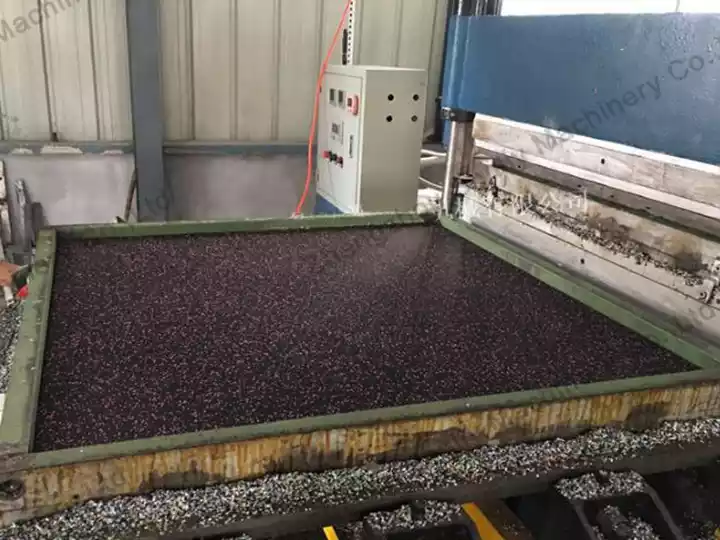
The prepared rubber granules are placed into the mold and leveled.
For a colored rubber tile, the colored fine rubber granules can be placed on the surface layer, while coarse black rubber granules can be used for the bottom layer.
Step 4: Pressing and Vulcanizing
After the mold is filled, a non-stick cloth is placed on top, and the mold is transferred into the vulcanizing press.
The machine performs heating, molding, and curing simultaneously. The documented vulcanizing time is approximately 3–8 minutes, depending on the production requirements.
Step 5: Demolding and Cooling
After vulcanization, the mold is opened, and the finished rubber tile is removed and placed on a rack for cooling.
Rubber Pavers Making Machine Technical Parameters
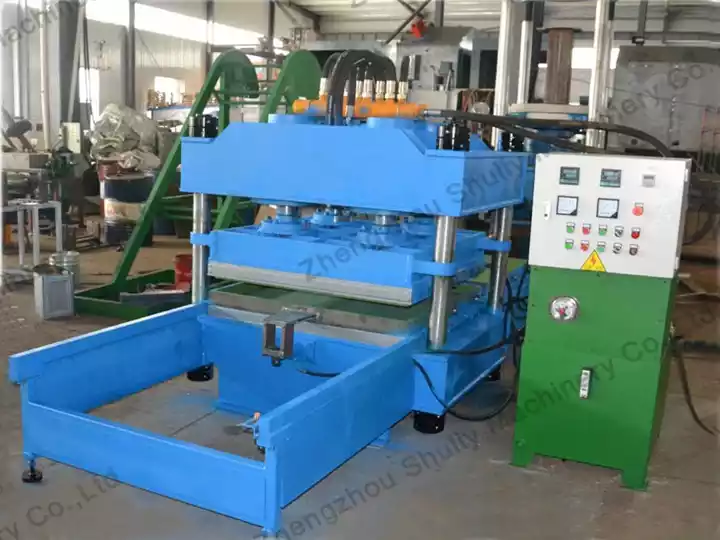
Large Rubber Tile Vulcanizing Press
| Parameter | Specification |
|---|---|
| 型号 | SL-D1100 × 1100 |
| Total Pressure | 120 tons |
| Heating Plate Size | 1100 × 1100 × 50 mm |
| Layer No. | 1 layer |
| Motor Power | 4 千瓦 |
| Molding Type | Single Layer |
The machine is available with molds for 500 × 500 mm and 1000 × 1000 mm rubber tiles. According to the source document, the 1000 × 1000 mm configuration can produce approximately 12–16 pieces per hour, while mold configurations vary according to tile size.
Small Rubber Tile Vulcanizing Press
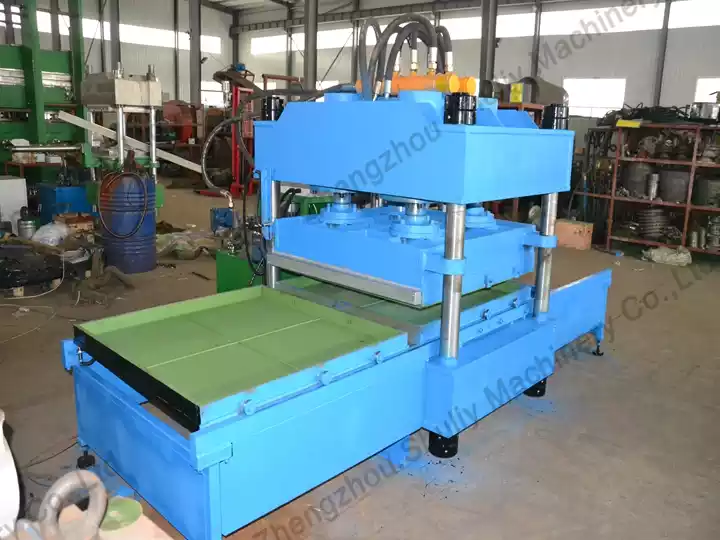
| Parameter | Specification |
|---|---|
| 型号 | SL-D550 × 550 |
| Total Pressure | 50 tons |
| Heating Plate Size | 550 × 550 × 45 mm |
| Layer No. | 4 layers |
| Motor Power | 3 kW |
The small model is designed for 500 × 500 mm rubber tile production.
Note: Actual output depends on rubber tile dimensions, thickness, mold configuration, material formulation, and vulcanizing time.
Main Components of Rubber Tile Production
Rubber Granule Mixer
The mixer is used to uniformly mix rubber granules, adhesive, and color pigments.
It consists of a mixing barrel, motor, agitator, and supporting frame. Multiple mixing barrels can be configured to handle different material colors and reduce color differences between products.
Rubber Tile Vulcanizing Machine
The vulcanizing press is the core machine for rubber tile production. It combines heating, molding, and curing, with automatic temperature control and timing functions.
The machine uses electric heating tubes and a hydraulic system to provide the required pressure during molding.
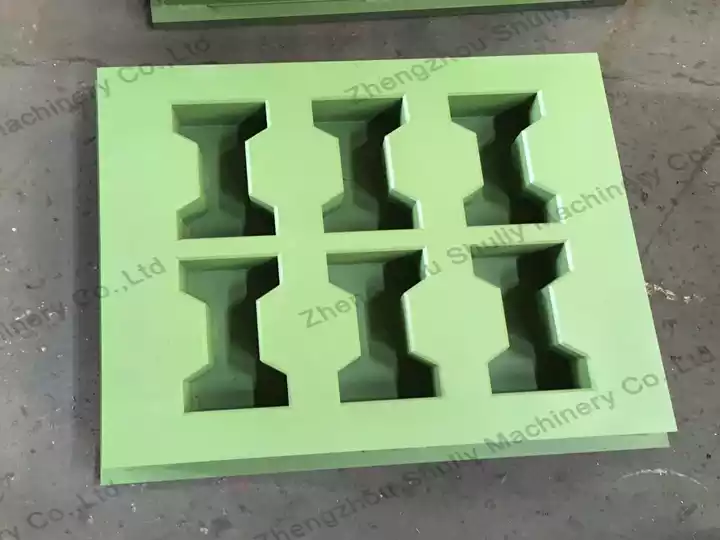
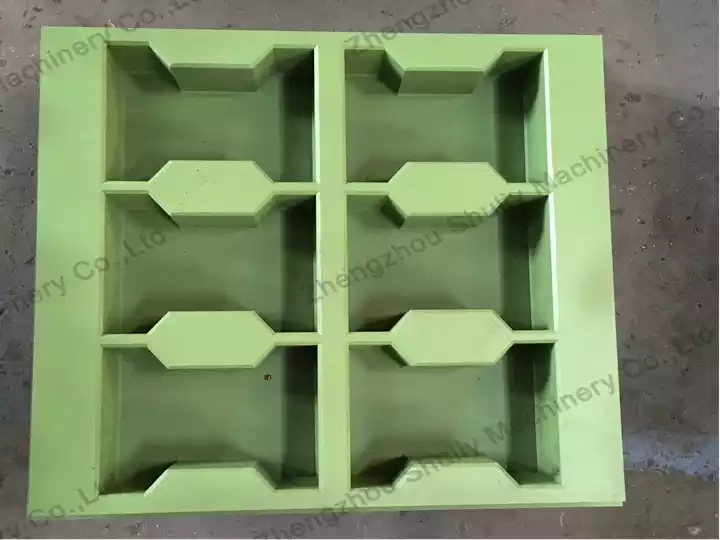
Rubber Tile Mold
The mold is used to determine the shape, size, pattern, and thickness of the finished rubber tile.
The source document describes the mold as being made from a high-carbon steel alloy, providing hardness and durability. Different shapes and patterns can be customized according to customer requirements.
Features of Rubber Tile Forming Machine
Heating, Forming and Curing in One Process
The machine integrates heating, pressing, molding, and curing, simplifying the rubber tile manufacturing process and reducing the need for separate processing equipment.
Automatic Temperature and Time Control
The intelligent control system uses a human-machine interface to accurately control temperature and vulcanizing time, making operation more convenient.
Adjustable Mold for Four Thicknesses
The mold is equipped with adjustable tooling and can produce four thickness specifications:
- 15 mm
- 20 毫米
- 25 毫米
- 30 mm
This allows one mold configuration to accommodate different rubber tile thickness requirements without requiring a completely separate mold for every thickness.
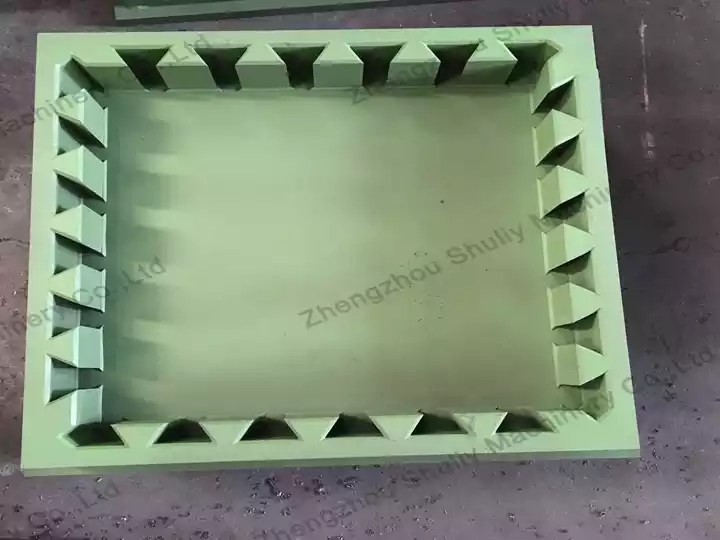
Teflon-Coated Mold Surface
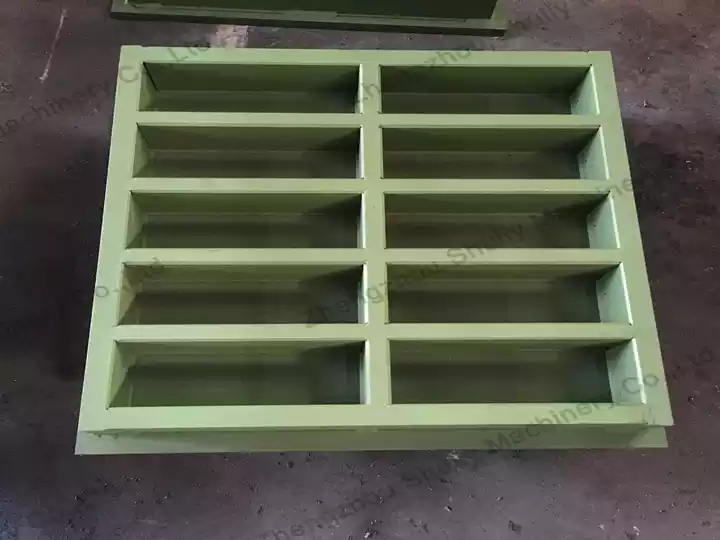
The mold surface uses a Teflon coating process.
The coating provides a non-stick surface and makes finished products easier to remove from the mold. More importantly, the treated mold does not require a release agent to be sprayed before every feeding, which can reduce the consumption of release agent and simplify daily production.
Easy Demolding
The non-stick mold surface makes demolding more convenient, helping operators remove rubber tiles efficiently while reducing the possibility of material sticking to the mold.
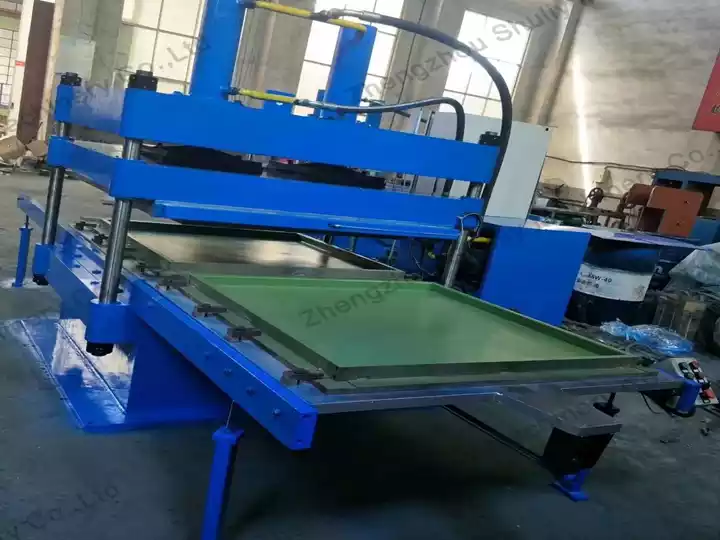
Push-Pull Mold Guide Rail
The mold adopts a push-pull guide rail structure, making mold movement and replacement more convenient and helping reduce operator workload.
Low Noise and Vibration
The equipment is designed with relatively low operating noise and vibration. The production process is straightforward, and operators can learn the basic operation after simple training.
Customizable Rubber Tile Products
The machine can be used to produce rubber tiles with different sizes, thicknesses, densities, colors, shapes, and patterns. Common product sizes listed in the source include 1200 × 1830 mm, 1000 × 1000 mm, 500 × 500 mm, and 300 × 300 mm, with a general thickness range of 10–45 mm.
Customized Rubber Tile Mold
The rubber tile mold is one of the most important components of the entire production process. It directly determines the dimensions, shape, pattern, and thickness of the finished product.
Our molds can be customized according to the customer’s requirements.
Adjustable Thickness
A major feature of this mold is its built-in adjustable tooling. The same mold can produce:
15 mm → 20 mm → 25 mm → 30 mm
This provides manufacturers with more flexibility when producing rubber tiles for different applications.
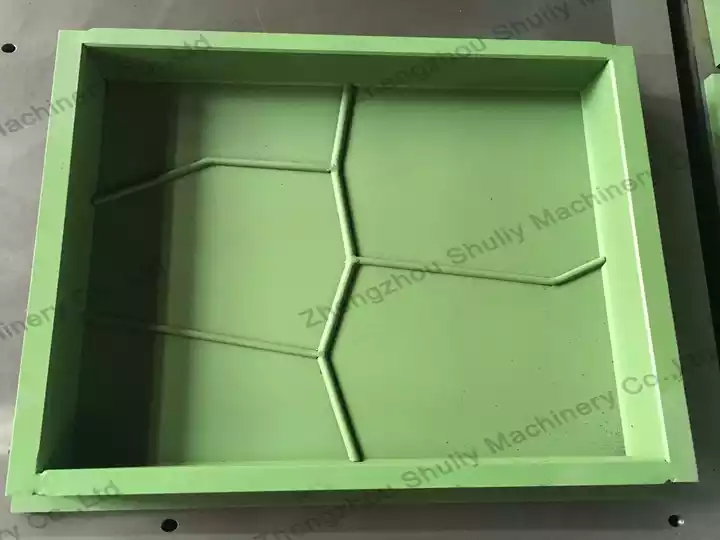
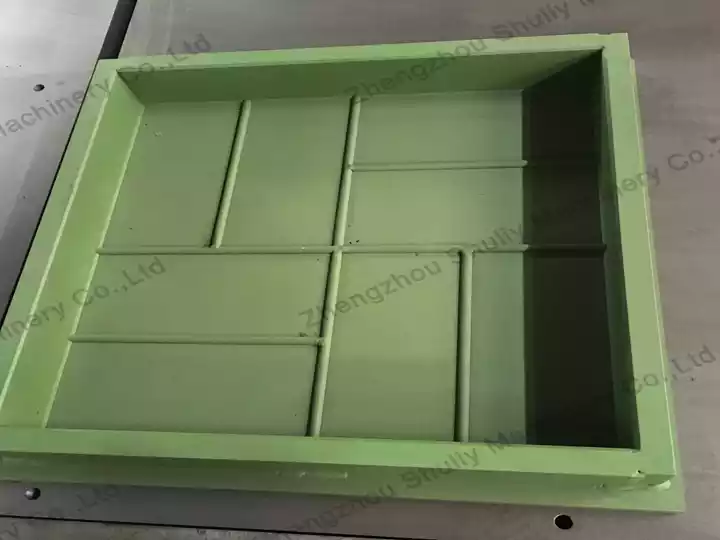
Teflon Coating
The mold surface is treated with a Teflon coating to provide a non-stick surface.
Unlike a conventional mold that may require release agent before each production cycle, the Teflon-treated mold can be used without repeatedly spraying release agent before feeding. This can help:
- Reduce release-agent consumption
- Simplify mold preparation
- Make demolding easier
- Improve production efficiency
- Reduce follow-up operating costs
Custom Shapes and Patterns
In addition to standard rubber tile molds, we can manufacture molds according to customer requirements, including different shapes, dimensions, surface patterns, and designs.
Customers can provide a drawing, sample, dimensions, or product design, and our technical team can assist with the mold design.
Rubber Tile Production Process
The production process is suitable for manufacturing rubber tiles from recycled rubber materials such as waste tires and other rubber waste.
Typical Material Structure
- Surface Layer: Fine rubber granules, approximately 0.6–1 mm
- Bottom Layer: Coarse rubber granules, approximately 1–4 mm
The source material also describes the use of rubber threads as another raw material option.
The typical formulation consists of:
Rubber Granules + Adhesive + Pigment
After mixing and weighing, the material is placed into the mold and then pressed and vulcanized.
常见问题
What thicknesses can the adjustable mold produce?
The mold can produce 15 mm, 20 mm, 25 mm, and 30 mm thick rubber tiles.
Does the mold require a release agent?
The Teflon-coated mold does not need a release agent to be sprayed before every feeding, helping simplify production and reduce release-agent consumption.
Can the rubber tile mold be customized?
Yes. The mold can be customized according to the required shape, size, pattern, and product design.
What is the pressure of the large vulcanizing machine?
The SL-D1100 × 1100 model has a 120-ton total pressure.
What raw materials can be used?
The production process can use rubber granules, rubber threads, adhesive, and pigments. Waste tires and other rubber waste can be processed into suitable rubber materials.
How long does vulcanization take?
The documented vulcanizing time is approximately 3–8 minutes, depending on the product and production requirements.
Contact Us for Rubber Tiles Making Machine
Looking for a Rubber Tiles Making Machine for your recycled rubber flooring business?
Our hydraulic vulcanizing press combines heating, pressing, molding, and curing in one machine. The adjustable mold can produce 15, 20, 25, and 30 mm thick rubber tiles, while the Teflon-coated surface makes demolding easier and eliminates the need to repeatedly apply release agent before each feeding.
We can also customize rubber tile molds according to your product size, shape, thickness, and surface pattern.
Contact us today to get the Rubber Tiles Making Machine price, working video, technical specifications, and customized mold solution for your rubber tile production business.
相关产品
In addition, we offer a wide range of recycling and processing machines, such as PET washing and recycling lines and PP pelletizing lines. If you are interested, please feel free to contact us for more detailed information about these machines.