
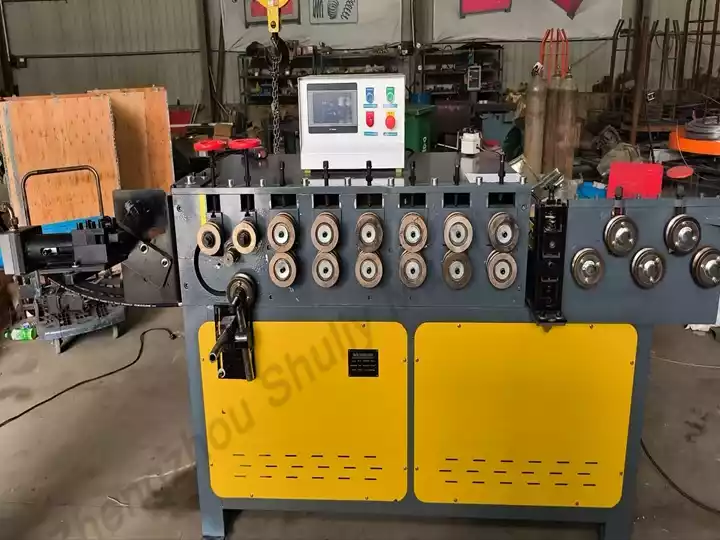
For construction projects, precast concrete plants, and steel fabrication workshops, steel rebar rings are essential components — used as stirrups, hoops, spiral reinforcement, and structural connectors. Producing these rings with consistent diameters is critical: even a few millimeters of variation can cause assembly difficulties, weak concrete bonding, and failed quality inspections.
The key to achieving repeatable, high-precision ring diameters lies in selecting the right rebar coiling machine and optimizing every step from raw material preparation to final bending and inspection.
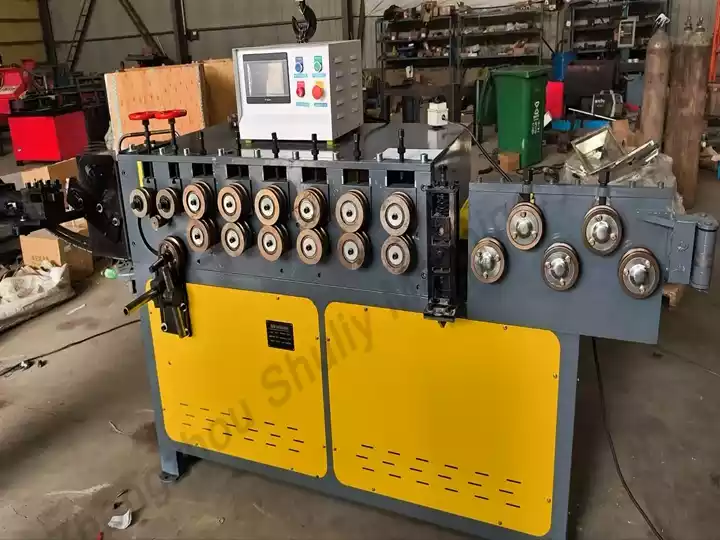
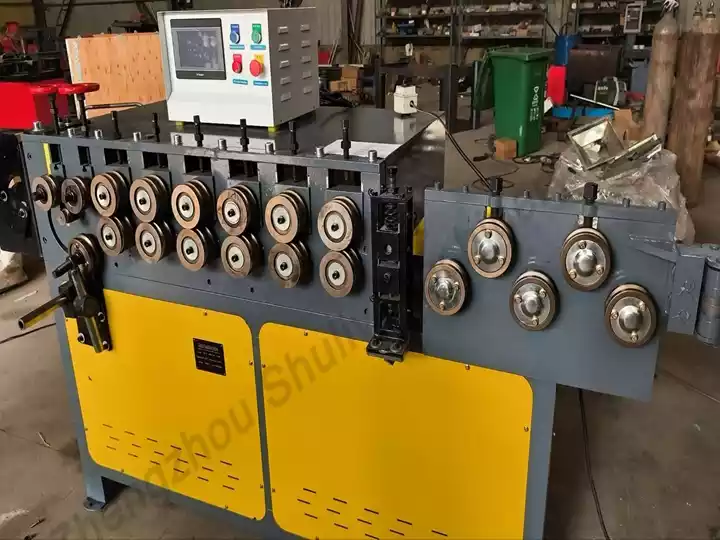
Start with High-Quality, Straight Raw Material
Diameter consistency begins before the rebar even reaches the bending stage. If the incoming steel bars are curved, oxidized, or inconsistent in cross-section, the finished rings will inherit those defects. Straight, clean rebar with uniform diameter is the foundation of precise ring production.
In a well-designed steel rebar ring production line, the first step is decoiling and straightening. A rebar straightening machine pulls coiled rebar through straightening rollers that remove the natural curvature from the decoiled rod. The result is a straight bar with minimal residual stress — ready for precise bending in the rebar coiling machine. Straightening accuracy directly affects ring roundness; bars with residual curvature will produce oval or distorted rings regardless of how precise the bending machine is.
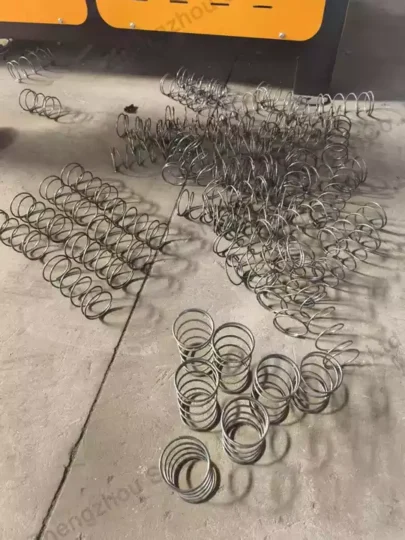
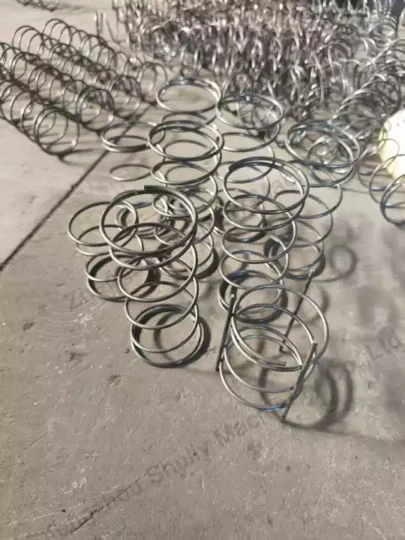
Straightening and Cutting to Consistent Lengths
Each rebar ring starts as a straight bar of a specific length. If the cut length varies, the resulting ring circumference varies — and so does the diameter. A rebar straightening and cutting machine ensures that every bar is straightened and cut to the same length within a tight tolerance — typically ±2 mm.
Modern straightening and cutting lines can process bar diameters from 4 mm to 50 mm at speeds of 30–60 m/min, depending on the model. The cut bars are then fed into the rebar coiling machine, where they are bent into rings of the programmed diameter. Consistent feed length is one of the most overlooked factors in achieving consistent ring diameters, and a quality production line controls it automatically.
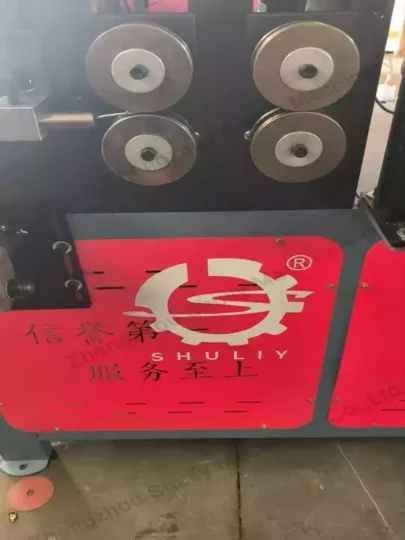
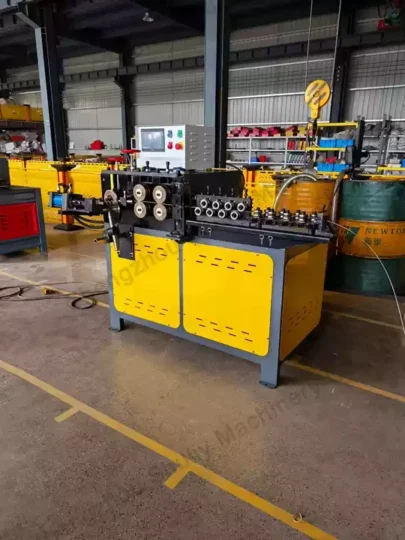
The Rebar Coiling Machine Is the Core of Ring Production
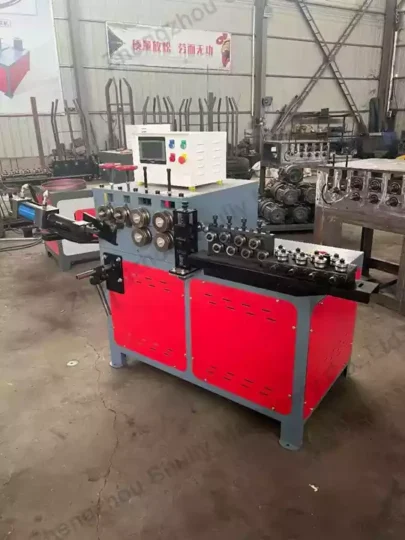
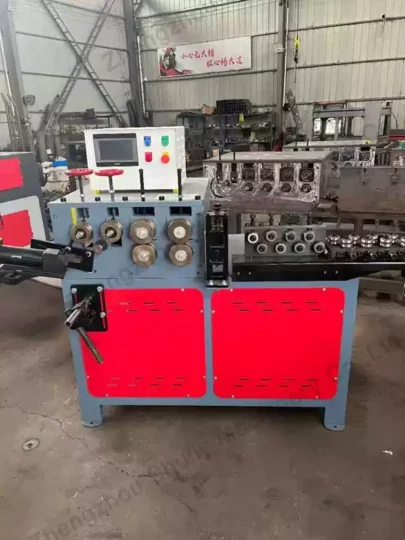
The rebar coiling machine (also called a CNC rebar bending machine or rebar spiral bender) is the heart of the ring-making process. It takes straight, cut rebar and bends it into circular, spiral, or arc shapes with programmed diameters. Here is how it works:
- The operator inputs the desired ring diameter, bending angle, and speed into the CNC control system.
- The machine’s servo motor drives a rotating bending disk, which carries the bending mandrel or pin.
- The rebar is clamped by a hydraulic or pneumatic fixation system to prevent slippage during bending.
- The bending disk rotates through the programmed angle, forming the rebar into a ring or arc.
- A sensor system — including optical encoders and position sensors — monitors the bending angle in real time and corrects any deviation.
A high-quality rebar coiling machine achieves a bending accuracy of ±1 mm on ring diameter and a repeat positioning precision of ±0.05 mm. This level of precision ensures that every ring in a production batch matches the specified diameter — whether you are producing 100 or 10,000 pieces.
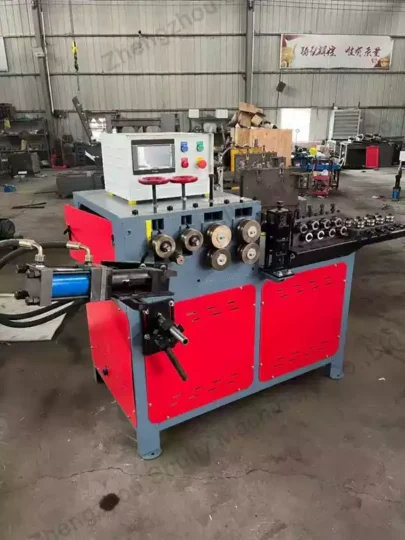
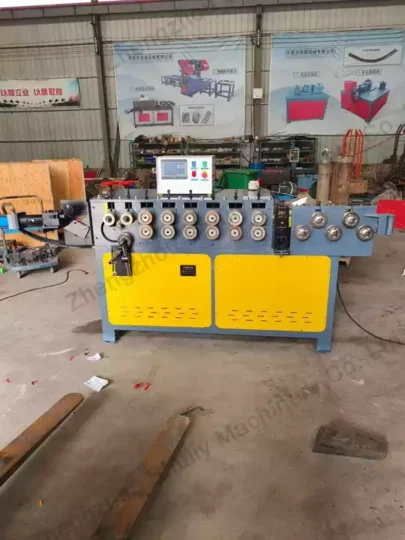
CNC Control Systems Guarantee Diameter Repeatability
The biggest advantage of a CNC-controlled rebar coiling machine over manual or semi-automatic benders is repeatability. Traditional bending machines rely on the operator’s skill and manual angle gauges, which introduce human error and batch-to-batch variation. A CNC system eliminates these variables.
Key features of a CNC rebar coiling machine include:
- PLC or industrial PC control: Parameters such as bending angle, ring diameter, feed length, and bending speed are entered digitally and executed with servo precision.
- Programmable recipes: The machine can store dozens of ring specifications and switch between them instantly — no manual recalibration needed.
- Real-time feedback: Optical encoders and position sensors monitor the bending disk’s rotation and correct deviations on the fly, ensuring every ring matches the programmed diameter.
- Automatic mold change: Quick-change bending pins and mandrels allow the machine to switch between different ring diameters in minutes, minimizing downtime between product runs.
This digital control is what separates a precision rebar coiling machine from a basic bar bender. When diameter tolerance matters — for example, in precast concrete pile cages or bridge spiral reinforcement — CNC control is essential.
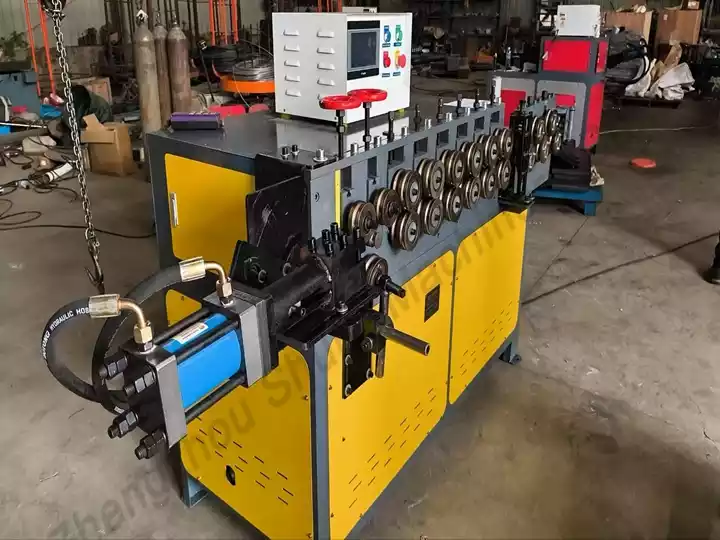
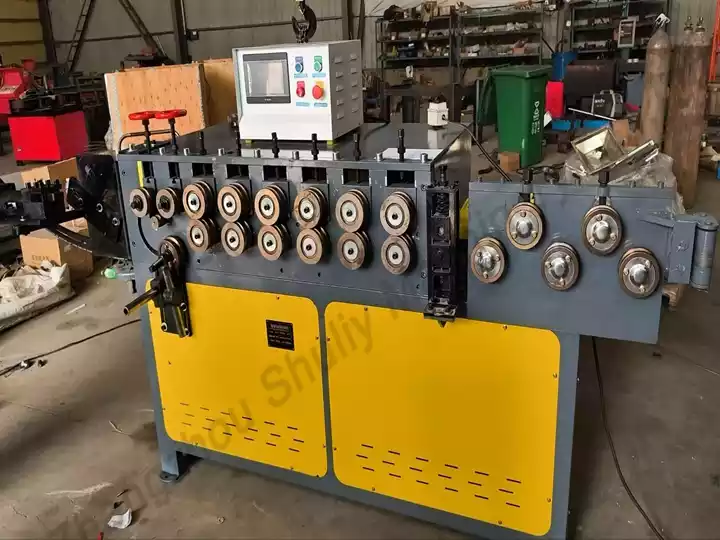
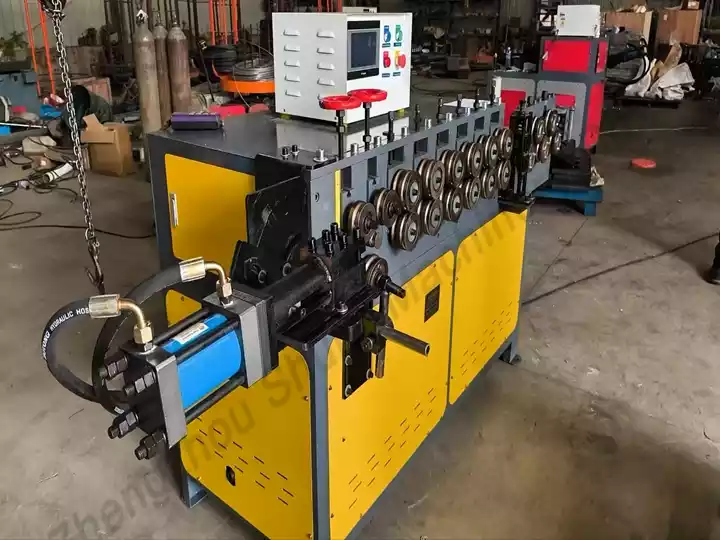
Choose the Right Rebar Coiling Machine for Your Production
Selecting the right rebar coiling machine for steel rebar rings depends on your output target, bar diameter range, and required precision. Key factors to consider:
- Bar diameter range: From 4–20 mm (light wire rings) to 4–50 mm (heavy structural rings).
- Bending accuracy: Look for ±1 mm diameter tolerance and ±0.05 mm repeat positioning precision.
- CNC control system: PLC or industrial PC with programmable recipes, springback compensation, and real-time feedback.
- Bending disk size: Working disk diameter of 300–500 mm or larger for big rings.
- Motor power: Typically 3 kW for light models up to 15–55 kW for heavy CNC machines.
- Tooling system: Interchangeable mandrels and bending pins for different ring diameters; quick-change design for minimal setup time.
- Automation level: From semi-automatic (manual feeding) to fully automatic (integrated straightening, cutting, bending, and welding).
- Production capacity: From 1,000 rings per shift for small machines to 20,000+ rings per shift for high-speed CNC lines.
Ready to Upgrade Your Steel Rebar Ring Production?
Steel rebar rings with consistent diameters are essential for structural integrity in construction, precast, and infrastructure projects. Whether you are building a new steel rebar ring production line from scratch or upgrading your existing bending stage, we provide complete solutions tailored to your capacity, bar range, and precision requirements.
Our steel rebar ring production line includes decoiling, straightening, cutting, CNC bending, spiral bending, welding, inspection, and packaging — all engineered to work together for maximum diameter accuracy and production efficiency.
Contact us today for a free consultation and quotation. Send us the following details and we will respond within 24 hours with a customized equipment recommendation and price:
- Your target output (e.g., 1,000 rings/shift, 5,000 rings/shift, 20,000 rings/shift)
- Your rebar diameter range (e.g., 6–12 mm, 8–25 mm, 10–50 mm)
- Your ring diameter range (e.g., 200 mm–2,000 mm)
- Your steel grade (HRB400, HRB500, or custom)
- Your available workshop space and location
- Any special requirements (CE certification, voltage, spiral vs. single ring, welding, etc.)
Reach out now and let our engineers help you build a steel rebar ring production line that delivers consistent diameters and dependable quality — batch after batch.