
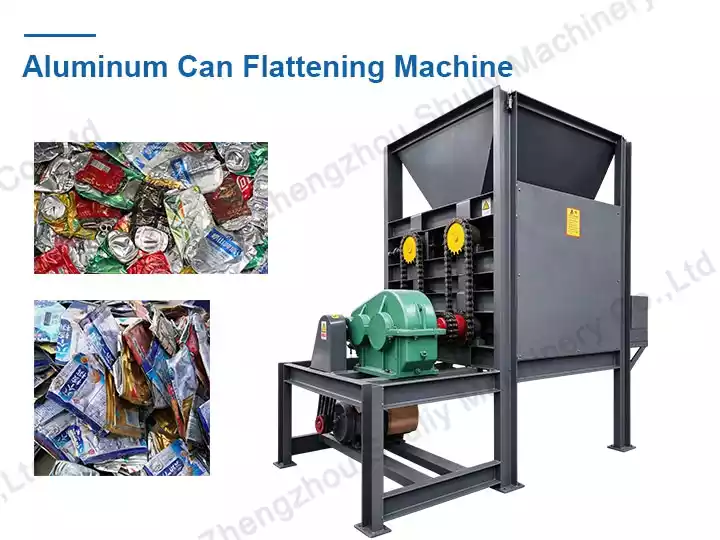
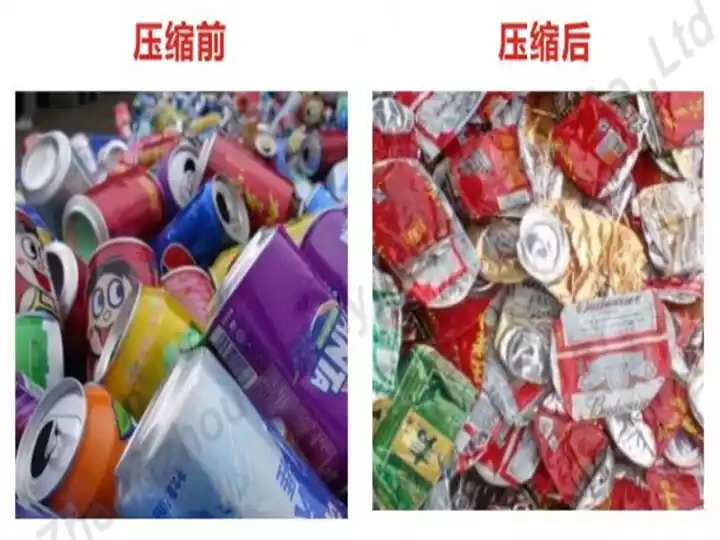
An aluminum can flattening machine, also known as a can crusher, can flattener, or beverage can baler, is a mechanical recycling device designed to compress empty aluminum cans, tin cans, and metal beverage containers into flat sheets or small dense pieces. By reducing the original volume by 80% or more, this machine significantly lowers storage space, transportation frequency, and recycling costs for scrap yards, waste stations, beverage factories, and metal recycling plants.
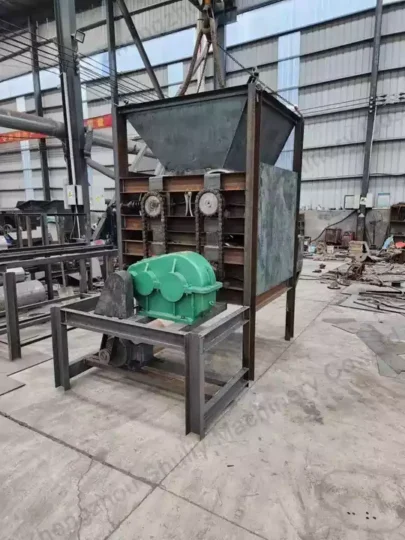
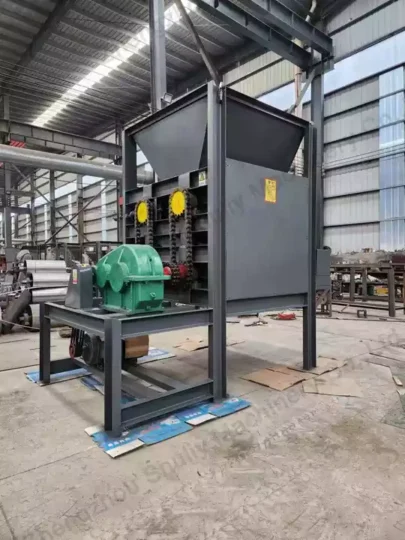
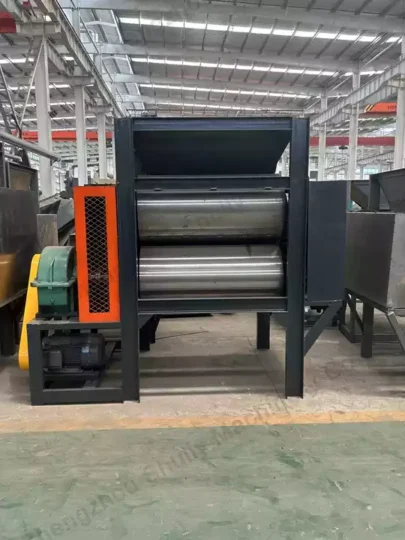
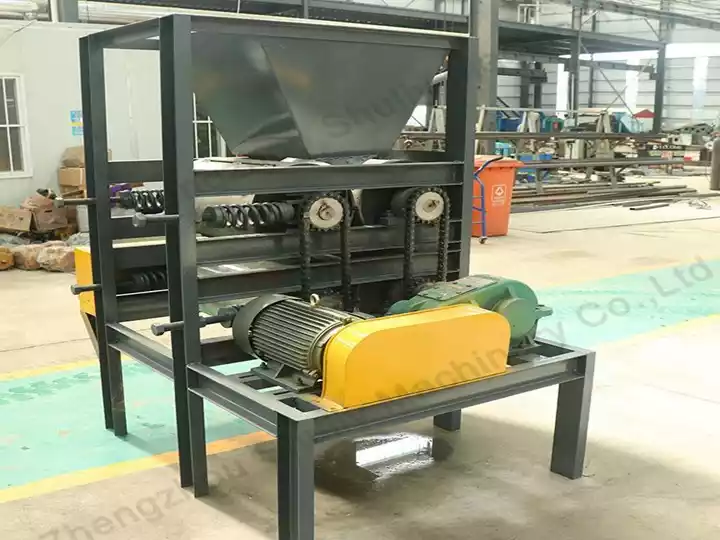
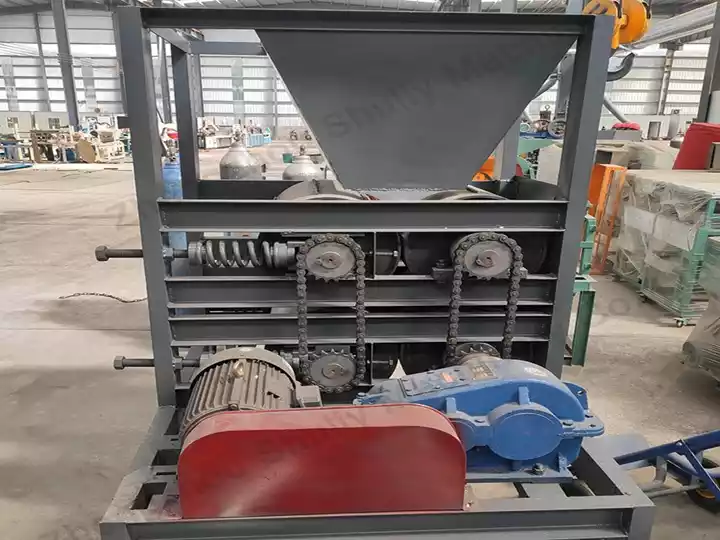
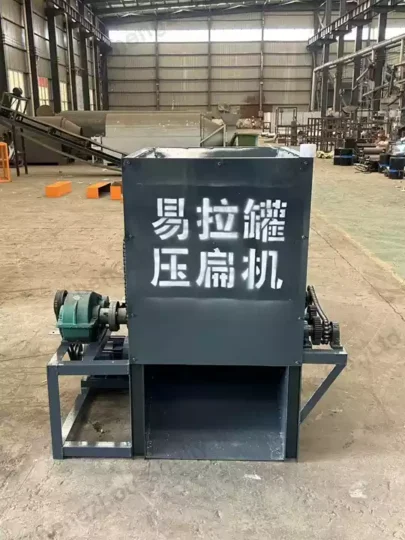
Unlike hydraulic balers that process mixed scrap metal, a dedicated can flattening machine features dual-roller compression, typically driven by an electric motor and reducer. Cans are fed through the top hopper, squeezed between two rotating rollers, and discharged as flat flakes with a uniform thickness of 1–2 mm. This mechanical crushing method is fast, continuous, low-noise, and energy-efficient.
Applications and Industries
Our can flattening machine is suitable for a wide range of recycling and waste-management scenarios:
- Scrap metal recycling stations — prepare aluminum cans for smelter delivery
- Waste sorting centers — reduce the volume of collected beverage packaging
- Beverage bottling plants — handle rejected or returned empty cans
- Supermarkets and shopping malls — compact cans from beverage vending areas
- Hotels, restaurants, and catering businesses — reduce waste volume and collection frequency
- Municipal solid waste facilities — improve material density before landfill or incineration
- Metal trading companies — add value to collected aluminum scrap
The machine can process not only aluminum beverage cans but also tin cans, steel cans, empty aerosol cans (depressurized), and thin-walled metal containers.
Why Do You Need an Aluminum Can Flattening Machine?
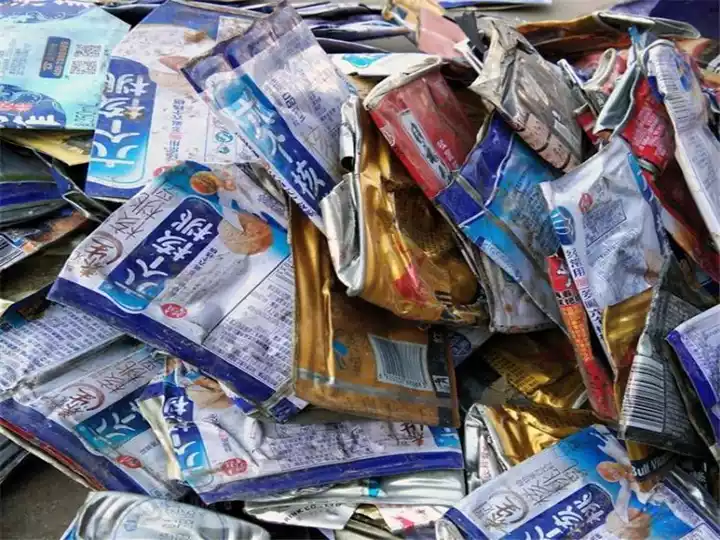
Empty aluminum cans take up a surprising amount of space. A standard 330ml aluminum can occupies about 30–40 cm³, and loose cans in a recycling facility create large air gaps. Before selling cans to a metal smelter, recyclers must either bale, shred, or flatten the material.
A can flattening machine solves this problem in three ways:
- Volume reduction: Compressed cans reduce storage and transport volume by 80–90%, allowing a single truck to carry 4–5 times more material.
- Higher selling price: Flattened aluminum is easier to weigh, inspect, and melt. Many buyers prefer pre-processed material and may offer better rates.
- Faster handling: Manual crushing or loose collection is labor-intensive. A machine handles hundreds to thousands of cans per hour with minimal labor.
Whether you operate a small scrap collection point or a large beverage waste recycling line, flattening equipment improves workflow efficiency and profitability.

How Does the Aluminum Can Flattening Machine Work?
The working principle is straightforward but highly effective:
- Feeding: Empty aluminum or tin cans are loaded into the top hopper. The hopper guides the cans toward the compression rollers.
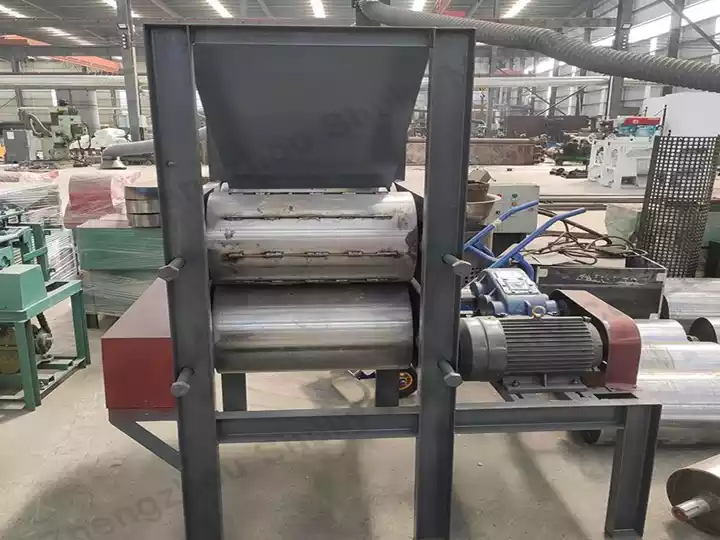
- Compression: Two parallel rollers rotate in opposite directions at a controlled speed and gap. As cans pass between the rollers, they are crushed into flat flakes.
- Discharge: Flattened cans fall from the bottom outlet, ready for collection, bagging, or direct transfer to a conveyor.
- Continuous operation: Because the rollers rotate continuously, the machine can handle a steady stream of cans as long as the hopper is fed.
No hydraulic oil is required, so maintenance is simpler than hydraulic balers. The main maintenance items are reducer oil replacement, roller surface inspection, and motor electrical checks.
Key Features of Our Aluminum Can Flattening Machine
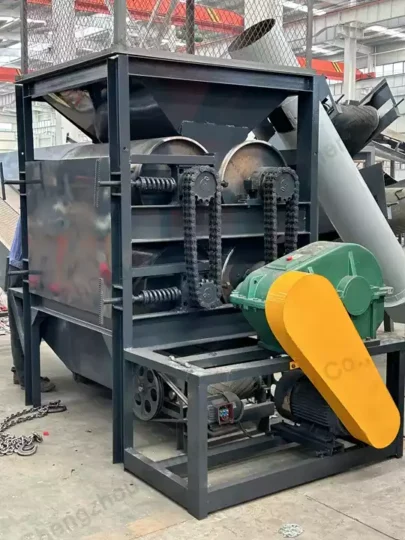
Our can flattening machine is built for continuous industrial use. The main design highlights include:
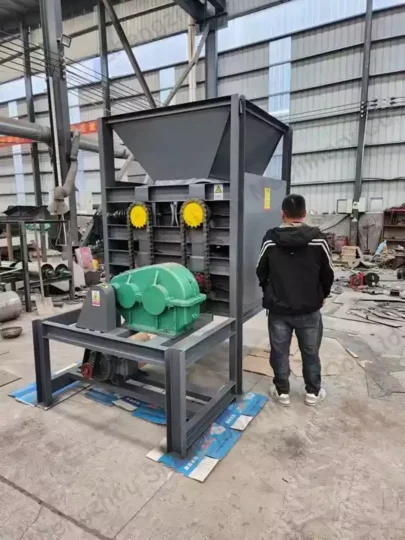
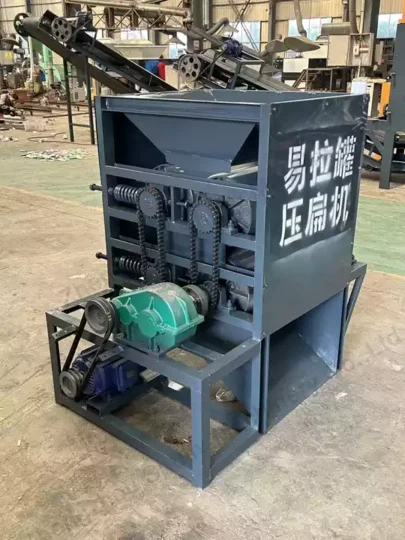
- Dual-roller mechanical compression — uniform pressure across the can body, producing flat flakes with consistent thickness and no spring-back.
- High-strength roller material — wear-resistant alloy rollers with diameters from 299 mm to 560 mm, suitable for long-term operation with aluminum, tin, and thin steel cans.
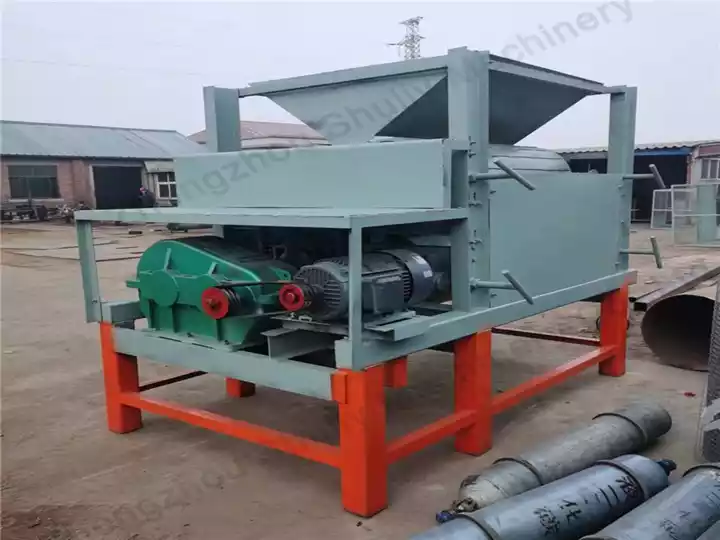
- Electric motor + reducer drive — stable power transmission, low vibration, and energy-saving operation. Motors range from 3 kW to 15 kW depending on the model.
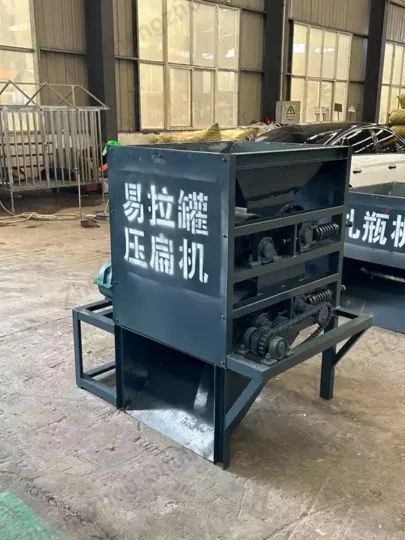
- Large top hopper — wide feeding opening allows batch loading and smooth feeding without manual pre-sorting.
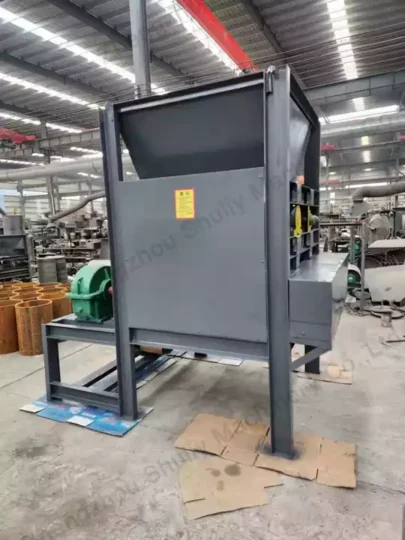
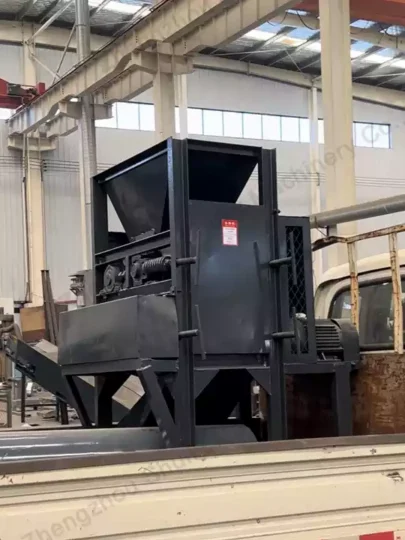
- Compact floor-standing design — vertical structure with four support legs, easy to install in limited workshop space.
- Overload and safety protection — protects the motor and gearbox from damage caused by foreign objects or excessive load.
- One-button start/stop — simple operation; one worker can manage the machine independently.
- Low noise and easy cleaning — enclosed compression chamber keeps dust and noise under control.
Technical Specifications
| Model | Dimensions (W*L*H mm) | Motor Power (kW) | Reducer Specification | Roller Diameter (mm) | Flake Thickness | Capacity (kg/h) |
|---|---|---|---|---|---|---|
| 400 | 1040*1270*1500 | 3 | Type 200 Reducer | 299 | 1-2mm | <100 |
| 600 | 1080*1430*1600 | 4 | Type 200 Reducer | 299 | 1-2mm | <180 |
| 600 | 1280*1510*1850 | 7.5 | Type 250 Reducer | 406 | 1-2mm | <260 |
| 800 | 1750*1250*1900 | 7.5 | Type 250 Reducer | 406 | 1-2mm | <300 |
| 1000 | 2050*1300*2000 | 11 | Type 350 Reducer | 406 | 1-2mm | <500-700 |
| 1000 | 2300*1570*2200 | 15* | Type 500 Reducer | 508* | 1-2mm | <1100-1300 |
| 1200 | 2300*1450*2000 | 11 | Type 350 Reducer | 406 | 1-2mm | <700-900 |
| 1200 | 2695*1600*2250 | 15* | Type 500 Reducer | 560* | 1-2mm | <1800-2000 |
| 1500 | 3000*1560*3020 | 15* | Type 500 Reducer | 560* | 1-2mm | <2000-2600 |
Notes: Capacity depends on can size, material thickness, feeding speed, and operator practice. Prices are ex-works reference values; final quotation depends on configuration, shipping, and optional accessories.
How to Read the Specifications
- Model number (400, 600, 800, 1000, 1200, 1500) generally corresponds to the roller width or machine series. Larger numbers indicate wider feeding width and higher capacity.
- Motor power ranges from 3 kW for entry-level models up to 15 kW for heavy-duty production lines.
- Roller diameter is the key factor determining compression force and throughput. Rollers range from 299 mm to 560 mm.
- Output thickness is controlled at 1–2 mm, which is ideal for dense stacking and furnace feeding.
- Capacity ranges from under 100 cans/hour for small manual-feed units to over 2,600 cans/hour for large automatic systems.
Benefits of Using a Can Flattening Machine
Save Storage Space
Flattened cans can be stacked tightly in bags, bins, or containers. This is especially valuable for facilities with limited floor space.
Reduce Transport Costs
Because more material fits into each truck or container, logistics costs drop significantly. In many cases, transport frequency can be reduced by 60–80%.
Improve Recycling Efficiency
Pre-flattened aluminum melts faster in furnaces and requires less handling at the recycling plant. This can lead to better pricing from buyers.
Lower Labor Costs
One machine replaces multiple workers who would otherwise manually crush or sort cans. Operation is simple and safe.
Support Environmental Goals
Aluminum is 100% recyclable without quality loss. By making recycling more efficient, can flatteners help reduce landfill waste, energy consumption, and carbon emissions.
How to Choose the Right Model?
Selecting the correct machine size depends on several factors:
- Daily or hourly can volume: Estimate how many cans you need to process. Small stations can use the 400–600 models; industrial recyclers should consider 1000–1500 models.
- Power supply: Confirm your available voltage and phase. Standard machines are usually 380V/50Hz three-phase.
- Space available: Check the machine dimensions against your workshop layout. Larger models require more floor space and ceiling clearance.
- Feeding method: For high-capacity lines, consider adding a conveyor belt or automatic feeding system.
- Budget: Entry-level models start below $7,000; heavy-duty industrial models range from $30,000 to $52,000.
- Optional accessories: Magnetic separators, dust collectors, and discharge conveyors are available based on your process.
If you are unsure which model fits your operation, contact us with your expected capacity and material type. We can recommend the most cost-effective configuration.
Frequently Asked Questions
What materials can the machine flatten?
The machine is designed for empty aluminum cans, tinplate cans, steel beverage cans, and thin metal containers. It is not suitable for thick-walled drums or sealed pressurized cans.
Can it flatten plastic bottles?
This model is optimized for metal cans. For plastic bottles, a dedicated plastic bottle baler or perforator is recommended.
Is the machine safe to operate?
Yes. The machine includes safety guards, overload protection, and an emergency stop button. Operators must follow safety instructions and avoid contact with moving parts.
What is the typical delivery time?
Standard models are usually ready within 7–15 days after order confirmation. Custom configurations may take longer.
Do you provide spare parts?
Yes. We supply rollers, bearings, reducer components, motors, belts, and other spare parts for all models.
Get a Quote Today
If you are looking for a reliable aluminum can flattening machine for your recycling business, contact us today. We offer factory-direct pricing, technical support, and customized solutions for small, medium, and large-scale operations.
Send us your requirements — including daily can volume, can type, and destination country — and we will respond with a detailed quotation and model recommendation within 24 hours.
Related products
As a professional recycling machinery manufacturer, we also offer a wide range of aluminum can processing equipment, such as aluminum can shredders. If you are interested, please feel free to contact us for more details.